Showing posts with label House Rules. Show all posts

Monday, June 28, 2010

Rules Tweak #4 - Got to Eat

This is an oldie but a goodie from the guys over at the At-Will blog. They have so many sweet additions to the 4e ruleset it is hard to quantify. What I am stealing here though isn't that exciting. It is very mundane, but in a good way. Remember my point with this series was to discuss ways to make 4e a bit more gritty, a bit more mundane in truth, to strip away some of the high fantasy fare for a more earthy feel. Again, with the end goal being to use these houserules in a 4e Dark Sun game. Anyways, enough from me.

Here is my slight, slight, slight tweak of Ration Points from the At-Will blog
------------------


Ration Points

Rations represent the basic necessities needed to live –food, water, and the means of getting or storing these items.


Ration Points are used to abstract and collect what the players need to survive into on eas-to-track resource. Instead of spending more time than is necessary with everyone doing seperate book-keeping, Ration Points lump all that book-keeping into one resource.

Ration Points operate on these two simple principles:

Each Ration Point lets the party live comfortably for one day.

Each day the party loses one Ration Point.

To acquire Ration Points:

 Forage (using an acceptable DC for level) per Ration Point

 Buy them (1 Ration Point is equal to 1 gp per party member)

 Any other way the characters are determined to be clever…(i.e. roleplaying out hunts, stealing, or, gulp, cannibalism)

As long as the PCs currently possess Ration Points they suffer no consequences. The first day the party spends without Ration Points, and every day thereafter, they lose two healing surges. These healing surges cannot be regained until they the party has spent consecutive days with Ration Points equal to the number of days without. So if the party went three days without Ration Points, they’d need three days with Ration Points to regain the healing surges lost.

After 3 days without ration points the PCs are weakened until all healing surges are regained. Also, in the case that the PCs have no more healing surges, they instead suffer HP damage in an amount equal to what their healing surge would normally heal.

Tuesday, June 22, 2010

Rules Tweak #3 - Stunting

Back with the rules tweaks. Make sure to check out the previous ones or today’s post may lose you.


Today, I’m continuing on with ways a player may spend their Fate Points.

Let’s take a second here to acknowledge that this idea is really not mine, it is Ryven Cedrylle’s. Check him out at the At-Will blog, his twitter account, and on the Power Source Podcast (more on this tomorrow).

So let’s just jump in, shall we:

For 1 Fate Point a character may stunt a power. These power stunts allow a single power to be used in a unique manner in addition to their normal usage. Our cleric from last time, Gordian, normally uses gaze of defiance as an attack power, he wants to use it in this encounter to also add bonuses to his ability to demoralize a foe with the intimidate power. This bonus should be higher than the normal +2 he could make, but can be left up to the DM. Regardless of the bonus, until the end of the encounter, Gordian may use gaze of defiance as normal, or may use it to instigate an intimidate check.

In Ryven’s example, he gives an assassin using executioner’s noose to swing around like Spider-man. You can see there are quite a few ways to use this power.

Next time will get into some rules that have less to do with characters and more to do with environment and combat.

Wednesday, June 16, 2010

Achievements in Dungeons and Dragons

Ok, I’m going to put off rules tweak one more time. I promise.


Today I wanted to talk about achievements very briefly.

You know achievements right? They are those things in video games and MMO’s that acknowledge you did something ‘cool’ – like killing 450 beetles or something.

Well, with just a minor tweak, I think that achievements have a place in the world of tabletop RPGs. As with most of my slight rules tweaks (I guess I am kind of continuing on the series), the goal behind achievements is to fuel a player’s immersion into his character. However, achievements also come with some solidly mechanical benefits.

Instead of telling you how to craft them, let me give you two examples from my current game.

Lady’s Man
When you fail a Bluff or Diplomacy check against a female target, you may immediately roll again. If this second roll works, you gain a pity success, and for all practical effects are to be considered as having succeeded the original roll.


Starts Strong
Any time you roll a critical hit on your first attack during an encounter, you deal an additional 1[w] damage.

Pretty simple right? The first one was given to Imilio, a virtue of valor bard. He has flirted with every female NPC. At first his rolls were comically bad, but he remained persistent, to the point where it seemed appropriate to give him this little bonus. It is not powerful enough to break the game, and it really adds flavor to his character.

The second one belongs to Ghesh are dragonborn paladin of Bahamut. He just joined are group last session as a replacement for a fallen halfling. On his very first attack, he critted and did upwards of 40 points of damage (3rd level character), nearly killing his foe in one strike. Considering it was his very first impression on the group I gave him the preceding bonus. Again, not gamebreaking, but flavorful.

Anyways, I hope this helps someone out there – do you guys do anything similar?

Tuesday, June 15, 2010

Let's Put Regis Philbin in Your Next RPG Puzzle

I’ve really been living up to my moniker lately as I’ve been stealing from everywhere.


Namely podcasts – my recent rules tweaks have been inspired/ripped from the wonderful 4e podcast, The Power Source.

However, despite my promise to continue on with that series today, this blog post is borrowing heavily from the 3.5 Private Sanctuary. The most recent podcast was, ostensibly, about defining roleplaying – but there was a large tangent that essentially broke down into the following claim about RPGs or, at the very least, D&D:

When it comes to roleplaying Strength, Dex, and Con we rely on the rolls. If you have an 18 Strength you can lift the boulder – it doesn’t matter if you are a sickly 4’1 pre-teen girl with a broken arm. The stats back you up . . . however, when we roleplay the Int, Wis, Cha attributes we often ask more of the players than the characters. For example, even though your bard has an +18 bluff, it is not inconceivable that if the player is saying outrageous things or stumbling over his words he may suffer a penalty. Or, perhaps as a better example and the one they focus on in the podcast, when a group interacts with a riddle or a puzzle, the wizard with 20 intelligence does not automatically solve it. Instead the group must piece things together as players, and thus they often rely on the wit of the player as opposed to the character.

--

A couple quick caveats: Is this a big problem? No, probably not.

Is the above example universal? No. Lots of GMs allow the roll of the die to supersede the roleplaying of the character. If you have a 21 intelligence, then maybe the GM allows you to roll your way to a solution regardless whether or not you can tie your own shoe laces.

---

The fun of a puzzle is diminished, I’d argue, when you can just blast it away with a roll of a die. The same goes with NPC interaction. If we just relied on the die roll, there’d be no need to ever speak a line of dialogue. You could just say, “I bluff him. I rolled a 32.”

One prevalent solution to this is allowing slight buffs to the roll depending on how well things are played by the player. The player who weaves an interesting and believable lie gains a +X to his Bluff check. The player who raises his voice and pounds the table gains a similar bonus to intimidate and so on. Perhaps, someone does such a commendable job roleplaying, the DM allows for an automatic success. I tend to think these solutions are both widespread and satisfactory.

But I do not feel the same situation deals with puzzles.


The game loses a bit of luster when the riddle is solved by a check. The elaborate runes carved into the doorway are deciphered with a skill roll or two. Often times puzzles are meant to challenge the players – and thus leaning to heavily on character options can bypass that ‘fun’ (if these challenges do not engage your players then this point is moot. Let them roll and move on.)

At the same time, as much time as you, the DM, invested in writing up an engaging puzzle, your player’s invested much more making an attachment to a character they’ve created. Thus, I’d argue it is poor DMing to block the options wholly from the field of play.

So what to do? Rely on Regis of course . . . introduce lifelines (Copyright Who Wants to be a Millionaire of course)


Instead of granting outright success for a high mental attribute, give unique bonuses. Now, in all honesty, I’m not even finished with the podcast yet – these ideas hit me and I wanted to get them down. They are rough to be sure. However, that is where you come in. What other ideas do you have? How does your game table broach this subject? Let me know.

LIFELINE #1 “Eliminate Some Wrong Answers”

Sometimes during puzzles players jump to the immediately wrong conclusion with fervor and conviction. Only then does the DM realize how is puzzle’s answer could be misconstrued in such a way. One use of a lifeline is to eliminate these wrong answers when a player makes an appropriate mental check. “Dergar the Red, you realize you’ve been thinking about it all wrong. The answer to the riddle can’t be the moon, these derro ruins are underground, and the derro never leave for the surface. Their comprehension of moon, of any light source must be something native to the Underdark.”


It’s best if in your elimination of a wrong answer you also drop subtle clues to the real answer.


LIFELINE #2 “Phone a Friend”

The player who succeeds on an appropriate mental check has access to a computer or a book for 20 seconds. This is obviously a lifeline that will only help with certain puzzles . . . riddles, word games, or just general reference to history. Also, it assists people when they know what they are thinking of but can’t quite get the word out.


The fun here is the time limit. The player is still participating in a game of sorts, instead of just being spoon fed the answer.


LIFELINE #3 “Ask the Crowd (DM)”

The player who succeeds on an appropriate mental check may ask the DM a yes or no question. Any question? So it could even be: Is the answer turning the dial to the right, then pull the lever with the blue gem?”

In a way this one works like a save point, it allows the player to venture an answer without it counting against the limit or time, or being wrong in general. Crafty players are going to ask very good questions, thus making this a potentially powerful use of a lifeline.

Ok, that’s what I got right now. Hope you guys like and I hope you guys contribute a few more ideas to this.

Monday, June 7, 2010

Rules Tweak #2 - This I Believe (and thus am rewarded . . .)

Ok I am going to attempt to be concise.

Last time I mentioned a bit about character creation; I discussed my desire that the process contains elements that evoke roleplaying and immersion into the character. To this end I introduced my cribbed version of roleplay hooks.

Well, I’m not done yet. I also want to do away with alignment. I’ve never, ever liked alignment; for the longest time I’ve instead used a variant of the World of Darkness (older edition) Nature & Demeanor. It’s served its purpose well. However, recently (and provoked by something elsewhere on the web if not actually stolen from there) I’ve realized that even this Persona element has faults I want to avoid. Enter then Beliefs, Goals, and Traits.

(These rules and tweaks are just my interpretation and implementation of other’s hard work. In this case everything has been inspired, stolen, or just ever-so-slightly-tweaked from the depths of Ryven Cedrylle’s mind. He occasionally blogs for At-Will (a great blog for house rules and rule expansions) and often has a segment at the end of the Power Source Podcast called Aberrant Rules. In my humble estimation it is a must listen to.)

BELIEFS
Beliefs are quite simply concepts that a character holds to be true or values that they hold dear. A cleric of Erathis may possess beliefs like civilization is the potential of humanity, barbarism is one step from devil worship, and religion is the best vehicle for education. These concepts help shape the outlook a character has on life, elements that, when combined with hooks and backgrounds, establish that character’s past and the way it influences them.

GOALS
We all have goals. Mine today are blog, finish freelance project, clean house, make dinner for wife, etc. Some goals are broader range – publish a novel, find a better job, get a house with at least 2 acres of property, etc.

Now the goals for adventurers may not be as pedestrian, but then again they might. Taking our Cleric of Erathis, let’s name him Gordian, we’ll examine his goals: retire into a high position at the church, free his brother from imprisonment, and open a school for wayward youths.

In many ways goals act as future hooks and measure of roleplaying guideline. We can assume that a character who wants to attain a measure of respect in the church when he retires is both pious and adheres closely to Erathis’ tenets (then again he may be a devious heretic who wants to play the game . . .). But these goals also inform the DM – Oh, we have an imprisoned brother! He is going to need property and funds to build that school?

TRAITS

Traits are personality elements. Charming, Helpful, and Calm, for example. But those are a bit bland. We can imagine better ones or scour the internets for lists of traits (oddly enough, Jeff Greiner of The Tome Show fame recently started a website for 4e players that has such a list as its first feature).

But let’s put our thinking caps on for Gordian and give him really particular traits: Bookish (Gordian’s big into studying the history of civilization and always has some book or another in his bag), Ragged Scar (a result of a highway robbery, Gordian carries a jagged scar on his cheek), and Teacher (Gordian’s always pictured himself running that school, and he has the bad teaching habit of explaining everything to everyone even when they do not ask).

I feel that this gives us a much better picture of who Gordian is as opposed to saying he is good.

!!! Important note !!! These may change! A character’s goals may shift, a belief may be shattered, a new trait may be garnered. How this is handled should be story appropriate. A character shouldn’t suddenly abandon a belief, but if over the course of the game that becomes evident in the roleplaying then lose it, replace it, or alter it as needed.

So What of It?
Now as you can see, I’ve opted to make each player choose 3 elements in each Persona category. But what effect do they have on gameplay. You may say, “Hell, even when a player chooses good as his alignment it doesn’t keep him from stabbing goblins for fun and taking their loot.” I agree. I like mechanics to inform, assist, and reward roleplaying; I know many do not, and there are logical arguments as to why. I will simply say for my game, for my enjoyment, and for the people I play with, a reward system for roleplaying enhances the fun of the game even more.

So the reward system is?

FATE POINTS
When a player does something that his character would do (as defined by these 9 Persona elements), he may be worthy of a fate point. Now I wouldn’t recommend handing them out willy-nilly style, as certain players will constantly be reaping these points, but I wouldn’t be stingy either. Perhaps, 3-5 points per session at max. I will test and report as I use this further.

So the obtaining of these points represents the player’s ability to ‘get into character.’ In Gordian’s case if the player made sure to point out to the DM that he is reading a book on the structure of hobgoblin society each night as they camp, the DM could award a single Fate Point (rewarding the Bookish element).

If in combat Gordian’s group is attacked by a youthful group of street thugs, the DM may want to award 2-3 points if Gordian argues to keep them alive and then scolds them at length on the failings of their chosen path (rewarding both his desire to teach wayward children and his pedagogical leanings).

Pretty simple right? (Easy to say now, of course at the game table a lot is going on. House rules, mine at least, always seek to add complexity . . . be aware.)

So now Gordian has 3 Fate Points. What can he do?

1. For 1 Fate Point a character may add a +1 bonus to any roll he just made. This is cumulative and multiple points may be spent.

2. For 1 Fate Point a character may reroll any NON-COMBAT roll and gain a +2 bonus on that roll if it somehow plays into one of his 9 Persona elements.

a. Example: Gordian and crew have captured a slavering orc who attempted to burn down a small village. Filled with rage at this attempt to undermine civilization, Gordian attempts to intimidate the orc into reporting his tribe’s hideout, but fails. However, he quickly spends a Fate Point alerting the DM to his jagged scar. The DM agrees the wicked wound is definitely intimidating; Gordian rerolls and gains a +2 bonus.

3. For 1 Fate Point a character may declare something to exist within the game world if it can tie back into his Personal elements somehow. One on hand a gaming group must be careful of overuse, but using a Fate Point in this fashion cannot overrule common sense or destroy what the DM’s already declared as fact. For example, a Fate Point cannot place an ocean within the deserts of Athas. Nor can it kill Elminster in the Forgotten Realms. On the other hand it opens the game to a wide range of fun, exciting twists and turns.

a. Example: Instead of using the example above, Gordian instead uses his Fate Point to pray to Erathis for guidance. Gordian’s player tells the DM that Erathis has told Gordian the orcs dwell in the caverns beneath an old monastery 3 days to the northwest of town and that this particular orc is the son of a witch doctor and may serve as some use as a hostage (a DM would be within his rights to ask for 2 Fate Points here as two truths were allowed).
(What rocks about this is the unpredictability it brings into the game. Player’s gain a level of control and, thus, immersion into the world. But even better is the twists it allows of the game. The DM may very well allow this, and should, but he can define the monastery as haunted by the ghosts of its past monks or better yet, that the son of the witch doctor is valued not because of familial ties, but because he serves as the vessel for a minor demon the orc shaman has summoned.)

4. Veto of Fate Points exists, as well, within DM control. A DM may twist a fate point expenditure back on the group, or put a certain chain of events into play, based on a character’s 9 Persona elements.

a. Example: Using the last above example, a DM may veto that knowledge by saying Gordian’s Bookish trait allows him knowledge that his prayer must’ve not been successful, since it is well-documented that the Fanged Spider tribe lives near the shores of Coldwater Lake.

Using this veto power grants the affected player a single Fate Point. And it also forces the players to think on the fly, while giving the DM the power to protect some of his more cemented or planned features within a campaign or adventure.

The final use of a Fate Point, a power stunt, will be discussed next time.

Also, in closing, let me stress again these rules and tweaks are just my interpretation and implementation of other’s hard work. In this case everything has been inspired, stolen, or just ever-so-slightly-tweaked from the depths of Ryven Cedrylle’s mind. He occasionally blogs for At-Will (a great blog for house rules and rule expansions) and often has a segment at the end of the Power Source Podcast called Aberrant Rules. In my humble estimation it is a must listen to.


Thanks. Until next time keep out of flanked position.

TLR

Friday, June 4, 2010

Rules Tweak #1 - Hook 'em

So continuing the Dark Sun theme . . . I’ve been busy putting together the house rules and ideas I want to implement come August. My little outline looks something like this (actually it looks exactly like this) --


House Rules for Dark Sun

  • Character Creation
    • Hooks
      • Gain a Free Feat
    • Persona
      • Beliefs, Goals, & Traits
        • Fuels Fate Point System
  • Dark Sun is Dangerous
    • Ration Points
    • Gritty Healing Surges
    • Injury Mechanic
    • Critical Fumble
    • Broken Weapons
      • Tweak WotC option?
  • Heroes are the power, not Magic Items
    • Magic Items as representation of personal skill
    • Healing Surges as a Resource
    • Never Give Up
      • A subset of Fate point system
      • Like Limit Breaks

So without further ado let’s break these bad boys down.

CHARACTER CREATION

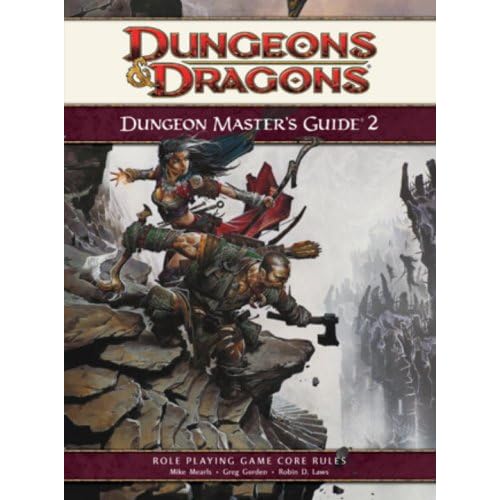
I like to set one session aside for character creation whenever possible. I also really, really, REALLY like the collaborative character creation presented in the DMG 2. I’m not going to go through that piece by piece. Just read it.


However, let me say that the reason I like all that stuff that frontloads the DMG 2 is because it puts an emphasis on that most hotly debated of words, roleplaying. So, when I began to brainstorm some of the things I wanted to incorporate in my Dark Sun game, this desire was my compass.


To some degree WotC has a mechanic that encourages this – backgrounds. A player gets a little outline of their past (with some prompting questions they should answer) and a small mechanical boon. Dark Sun takes this a notch further with themes. Check out this article by Dungeon’s Master to get a sneak peek at the characters. Pay particular attention to the extra encounter powers; these are granted by the themes.


But I want more, of course. Thankful WotC has me covered. SRM (Stephen Radney-McFarland, I think), author of the Dungeon article “Save My Game,” has a sweet little piece about hooks. Check his blog here for the full details, but allow me to summarize:

Hooks are essentially backgrounds for characters that pertain uniquely to the campaign you, the DM, has crafted. For example, if I’m running a campaign that I know will be very heavy into aberrants, I may have a hook called Unspeakable Ritualist that is available to arcane casters and details their possession of a book of odd rituals or their knowledge of a mentor who teaches these things; perhaps I would have a hook Fled the Deep available to dwarves who’ve lost a clan to alien horrors that welled up from beneath their mountain home. Get the point?

These hooks create a little extra tie and immersion into the campaign the DM is running; it gets people on the same page, and creates some connections amongst PCs. One little wrinkle I’ll be adding to this is that each hook also offers a small bonus feat. These will not be combat feats, or if they are they will have very limited usefulness. The key here is flavor. For Unspeakable Ritualist I may attach the EXPERT RITUALIST feat; for Fled the Deep maybe BATTLE HARDENED (check the compendium for details on these).

These feats shouldn’t make things too unbalanced, especially in regards to combat. What they do, however, is make the players feel like they are good at something from the word GO. Additionally, the hooks themselves often create more questions than they answer, thus enticing the player to get a bit more involved in crafting his character’s personality.

Hmm. I am already pushing past 500 words here. Let’s stop. I want to commit a whole post to my ideas on Persona (Beliefs, Goals, & Traits) replacing alignment and the Fate point system they feed.